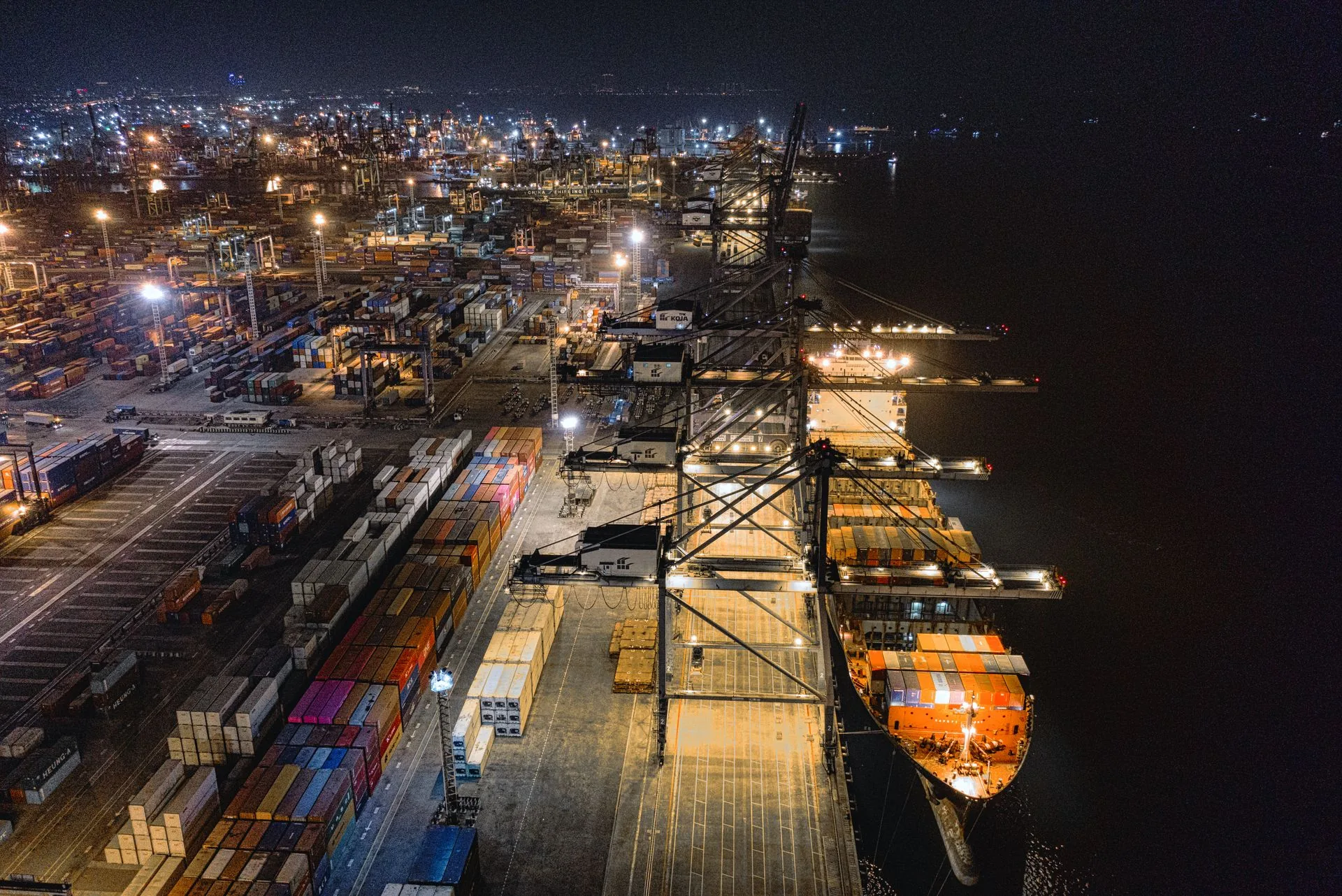


Every ocean shipment raises the same early question: book a whole container, or ship as part of a consolidated load? Volume is the obvious factor, but urgency, the nature of the goods, destination charges and your tolerance for risk all play a part too.
The two options
FCL (Full Container Load) means you book an entire container. You pay for the whole box whether you fill it or not. It is sealed at origin and, unless customs inspects it, stays closed until it reaches destination.
LCL (Less than Container Load) means your goods share a container with other shippers' cargo. A consolidator collects the shipments at an origin warehouse, loads the container, and at destination it is unpacked (deconsolidated) so each consignment can be released separately.
How each is priced
LCL: per cubic metre or per tonne
LCL is charged on a W/M basis (weight or measure). The carrier compares volume in cubic metres (CBM) with weight in tonnes and charges on whichever is greater, treating 1 CBM as equivalent to 1,000 kg. For most general cargo, volume is what drives the price.
On top of the freight, LCL carries consolidation and deconsolidation charges, and at destination there are usually handling and storage fees at the warehouse where the container is unpacked.
FCL: per container
FCL is quoted per container, plus origin and destination charges. Free time matters here: if the container stays at the terminal or outside it longer than agreed with the shipping line, demurrage and detention charges start to accrue.
Where FCL starts to pay off
There is no fixed figure. As a rule of thumb, many shippers find that a full container becomes competitive with LCL somewhere around 13 to 15 CBM. That break-even point moves with current rates, the route, local charges and the port of discharge, so the only reliable answer is to quote both options on a full door-to-warehouse basis, not freight alone.
Common container sizes
| Type | Approximate internal capacity | Typical use |
|---|---|---|
| 20' standard | ~33 CBM | Heavy, compact cargo |
| 40' standard | ~67 CBM | Large volumes of general cargo |
| 40' High Cube | ~76 CBM | Bulky, light cargo |
Treat these as reference figures. The volume you can actually load is usually lower, depending on carton sizes, pallets and how the cargo is stowed. Weight limits also apply, both for the container itself and for road transport at each end, which can prevent dense cargo from filling a box.
Specialised equipment such as reefers, open tops and flat racks is available for perishable or out-of-gauge cargo.
Transit time and handling
Time at sea is the same either way. Total time is not.
- With LCL, your cargo waits for the consolidation cut-off at origin, and at destination the container must go to a warehouse to be unpacked before each consignee can clear its share. That adds days.
- With FCL, the container sails when you load it and, once cleared, can go straight to your warehouse.
For time-sensitive shipments, FCL usually gives you more predictable dates.
Risk and paperwork
LCL cargo is handled more often: unloaded at the consolidator's warehouse, loaded with other goods, unloaded again at destination and then dispatched. Each touch is a chance for damage or shortage, so packaging and carton marking really matter. Cargo insurance is advisable for any shipment, and especially for LCL.
There is also shared risk. If another shipper in the same container has a documentation problem or is selected for inspection, the whole container can be held up.
On paperwork, LCL shipments typically involve a master bill of lading issued by the shipping line to the consolidator and a house bill of lading issued to each shipper. Our article on bills of lading and air waybills explains the difference.
Side-by-side comparison
| Factor | FCL | LCL |
|---|---|---|
| Pricing | Per container | Per CBM or tonne (W/M) |
| Best for | Medium to high volume | Low to medium volume |
| Total lead time | More predictable | Adds consolidation and deconsolidation |
| Handling | Minimal, sealed box | Several touches |
| Damage risk | Lower | Higher, depends on packaging |
| Delays caused by others | Not applicable | Possible |
| Charges to watch | Demurrage and detention | Deconsolidation and storage |
| Flexibility | Needs enough volume | Small, frequent shipments |
Making the call
LCL tends to be the better fit when:
- The order is small or medium-sized.
- You are testing a new supplier or product without committing much capital.
- You prefer smaller, more frequent shipments to keep inventory lean.
FCL tends to make more sense when:
- Volume is near or above the break-even point with LCL.
- The goods are fragile, high-value or sensitive to handling.
- You need tighter control over delivery dates.
- You can combine purchases from several suppliers in the same region into one container.
That last point is often overlooked. If you buy from several factories in China, their orders can sometimes be gathered into a single container of your own, turning several LCL shipments into one FCL. The Incoterms agreed with each supplier affect how this is coordinated; our Incoterms 2020 guide covers the basics.
Weekly consolidations from China
Speedy Logistics runs weekly LCL consolidations from China to Colombia, designed for importers who need to move smaller volumes regularly without waiting to fill a container. If you are planning a first order, our guide to shipping from China to Colombia walks through the full process.
Need a hand?
Not sure which option fits? Send us the volume, weight and origin of your cargo. We will compare FCL and LCL on a full landed-cost basis and recommend the option that makes the most sense for your operation. Get in touch.